When choosing gold and platinum jewellery, the right metal isn’t just about looks – it affects durability, maintenance, price, and how your skin reacts to it. Here’s a straightforward guide to the most common options.
Understanding Gold Purity: 24K, 18K, and 14K
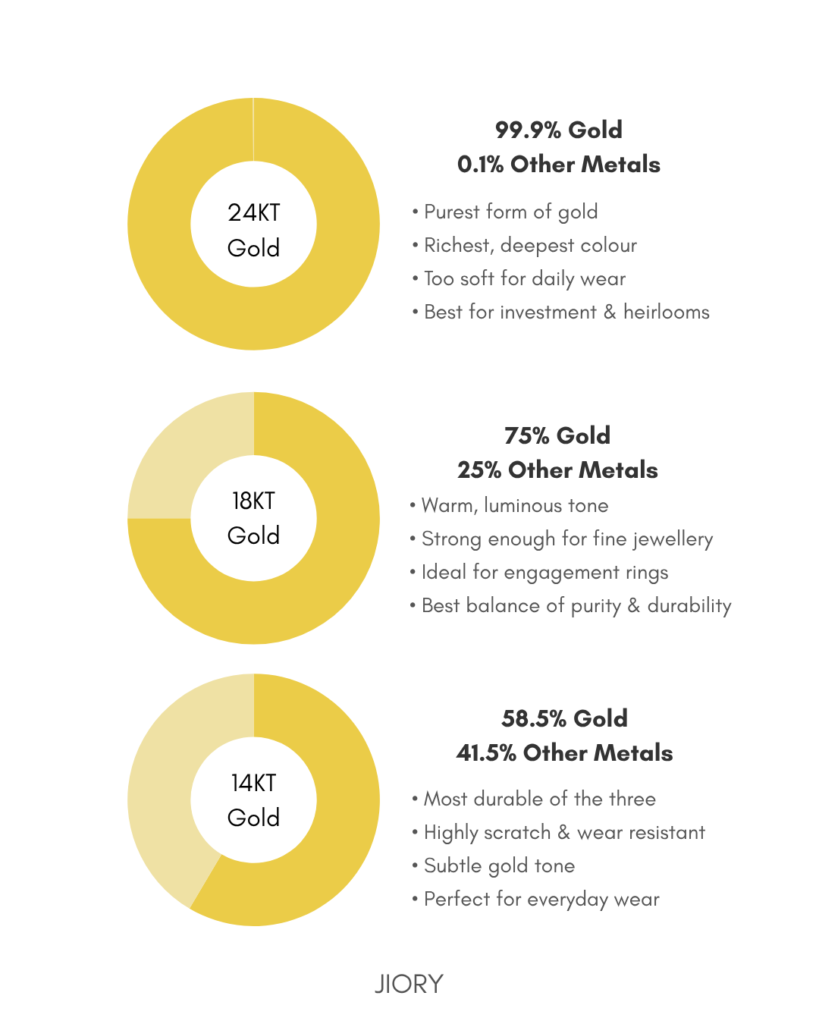
Gold jewellery is rarely made from pure gold. Instead, it’s alloyed with other metals to improve strength and workability. The “K” (karat) number tells you how much of the piece is actually gold. (Source: World Gold Council)
24K Gold – 99.9% Pure
- The purest form of gold, with its signature deep, rich yellow colour
- Naturally soft and malleable – not ideal for everyday jewellery or pieces set with stones
- More commonly used in investment bullion or ceremonial pieces rather than rings or bracelets
18K Gold – 75% Gold, 25% Other Metals
- The sweet spot for fine jewellery – rich colour with enough durability for daily wear
- The remaining 25% is typically a mix of silver, copper, and zinc (for yellow gold), or palladium/nickel (for white gold)
- Recommended for engagement rings and pieces you’ll wear regularly
14K Gold – 58.5% Gold, 41.5% Other Metals
- More affordable and harder-wearing than 18K
- The higher alloy content gives it slightly more resistance to scratches
- A popular choice for everyday jewellery
What About White Gold?
White gold achieves its silver-white appearance through alloying – typically with palladium or nickel – and a rhodium plating finish on top.
- White gold is not naturally white; the bright silvery colour comes from a rhodium coating
- Over time, the rhodium plating wears off, and the piece may develop a slightly yellowish or warm tint
- Re-plating is required every 1-2 years (depending on wear) to restore the original look
- White gold alloys that use nickel may cause skin irritation or allergic reactions in people with sensitive skin
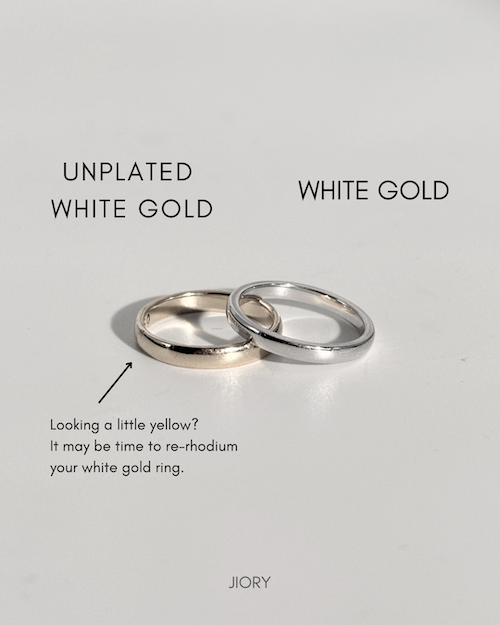
Over time, the rhodium plating wears off – re-plating is required every 1-2 years.
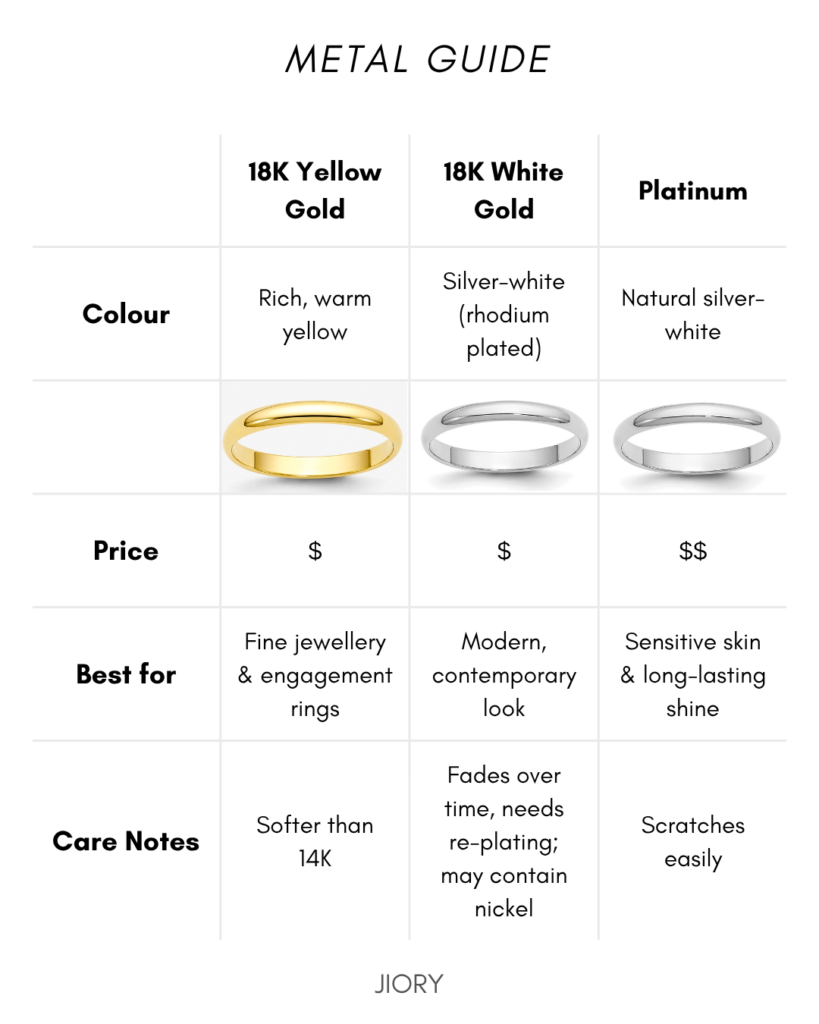
A Quick Comparison: Gold and Platinum Jewellery
Platinum: The Premium Choice
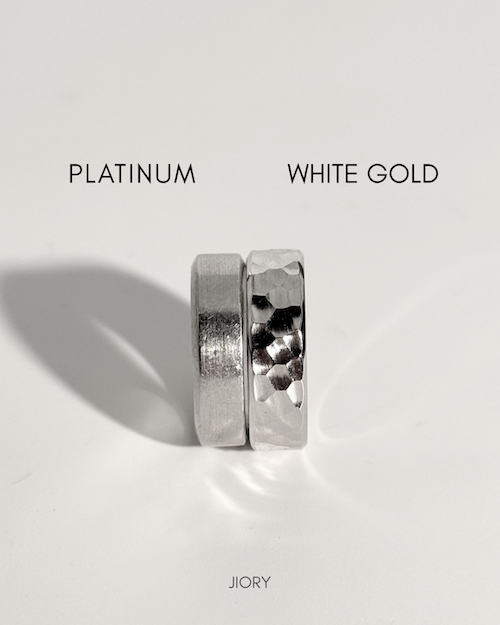
Platinum is a naturally silver-white metal – no plating required. It’s denser and rarer than gold, which is reflected in its price.
While platinum was traditionally the most expensive option, rising gold prices have narrowed the gap. That said, platinum’s higher density means pieces weigh more, so the final price at retail often remains higher.
- The colour is permanent and won’t fade or change over time
- Platinum is hypoallergenic, making it the best choice for sensitive skin
- It is, however, prone to surface scratches – a phenomenon called a “patina”
- Regular polishing by a jeweller can restore its original shine
- It’s heavier than gold, which some people find reassuring and others prefer to avoid
Platinum is hypoallergenic – the best choice for sensitive skin.
Which Gold and Platinum Jewellery Is Right for You?
- If you want a classic warm tone and plan to wear it daily → 18K Yellow Gold
- If you love a silver look but are on a budget → 18K White Gold (just be prepared for occasional re-plating)
- If you have sensitive skin, or want something that truly stands the test of time → Platinum
The right gold and platinum jewellery choice comes down to your lifestyle, budget, and how your skin reacts. When in doubt, choose quality – a well-made piece in the right metal will last a lifetime.
When in doubt, choose quality – a well-made piece in the right metal will last a lifetime.
Have questions about which metal is right for your next piece? Feel free to reach out – we’re happy to help.