Diamond Prong Styles: A Complete Guide to Claw Settings
Understanding diamond prong styles is one of the most important steps in designing a bespoke engagement ring. However, prongs are often overlooked in favour of the diamond itself. Not only do they keep your precious stone secure, but prongs also drastically influence the overall aesthetic of the jewellery.
Here is a guide to five distinct prong styles to help you choose the perfect finish for your custom piece.
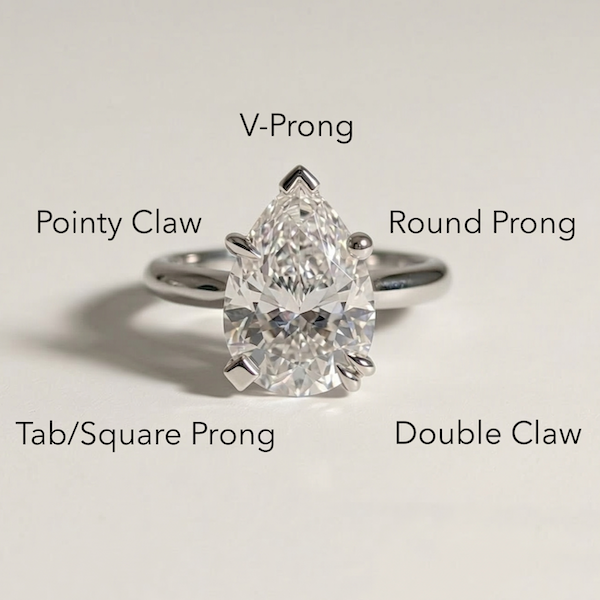
1. The V-Prong: The Protector
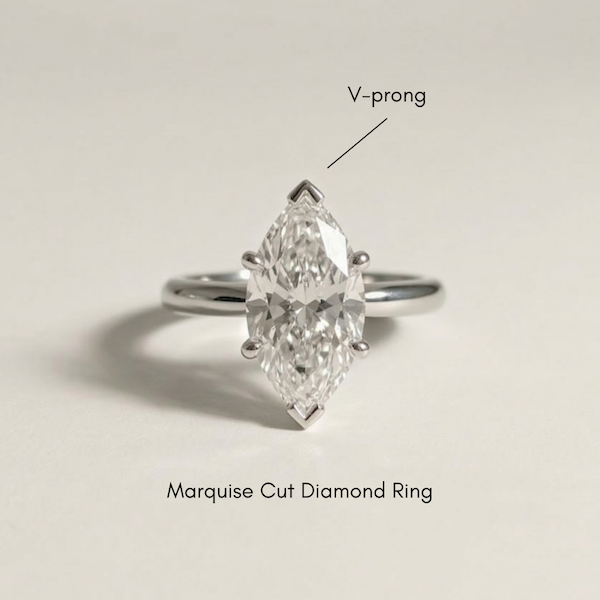
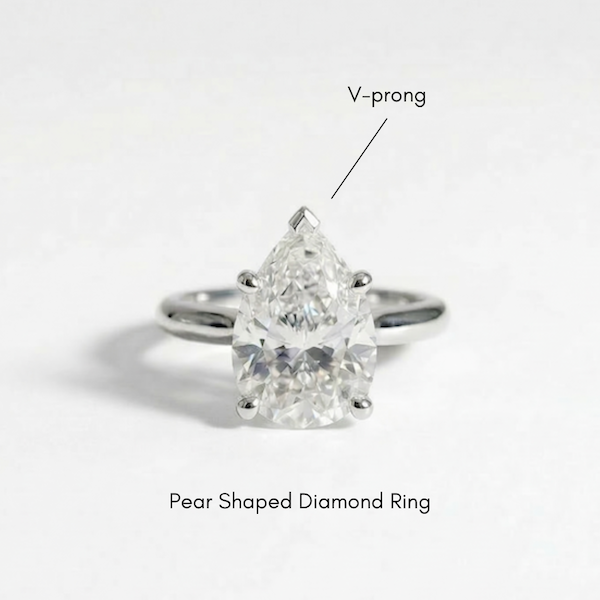
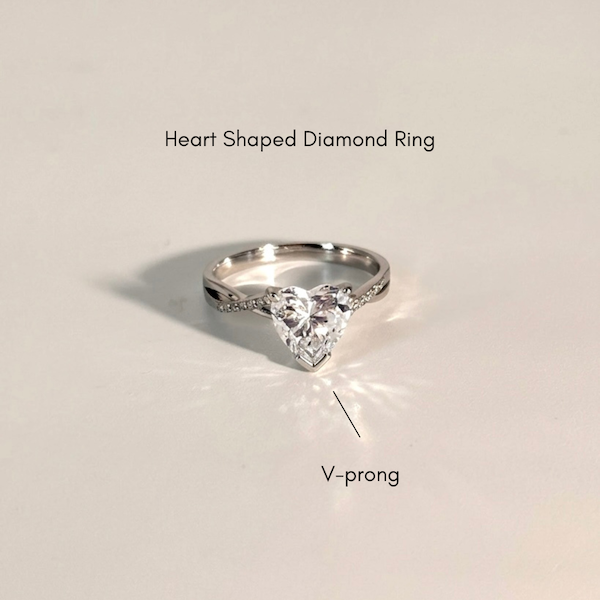
As the name suggests, the jeweller forms the metal into a “V” shape that wraps around the sharpest points of a stone.
- Best For: Heart, Pear, and Marquise cut diamonds. Because these shapes feature sharp, delicate tips that are vulnerable to chipping, the V-prong provides a solid wall of protection.
- Design Bonus: V-prongs are also occasionally used on Princess cut stones. Not only do they protect the sharp 90-degree corners, but they also beautifully emphasize the crisp, squarish geometry of the cut.
2. The Round Prong: The Timeless Classic
The round prong is the most widely used and traditional style in the market. It features a simple, smooth, rounded bead of metal gripping the stone.
- Best For: Literally every shape. It is the most versatile option available.
- The Look: It creates a softer, more romantic, and classic look.
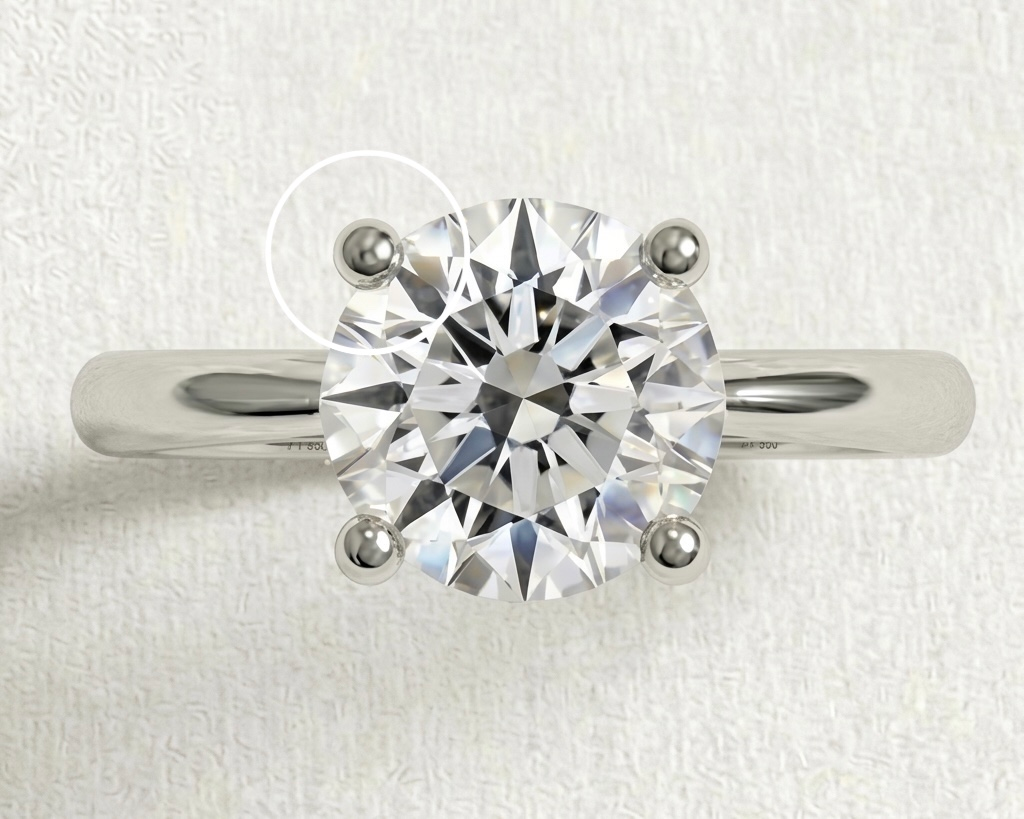
3. The Pointy Claw
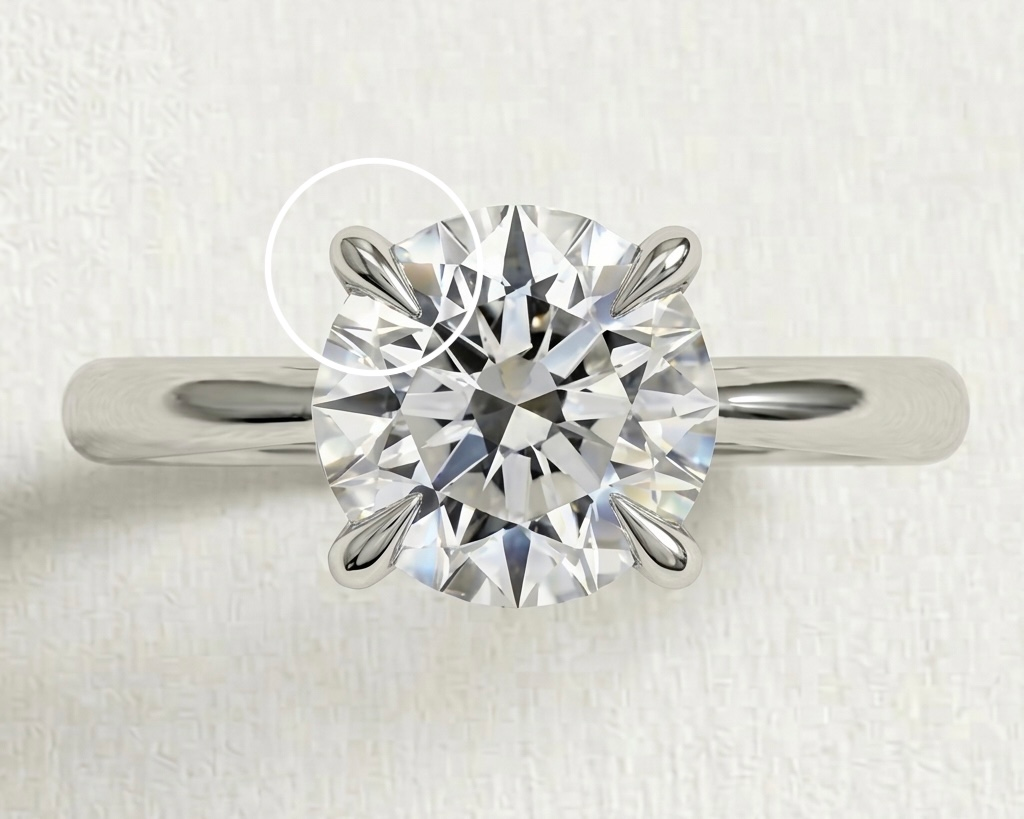
Pointy claws the jeweller files them to a sharp, fine taper that extends over the crown of the diamond.
- The Look: Because they taper off so finely, they blend seamlessly into the facets of the diamond. This makes the metal look almost invisible from a top-down view, drawing maximum attention directly to the stone.
- Why pointy claw: It draws all the attention to the centre and the metal is less visible
4. The Tab / Square Prong: The Bold Guardian
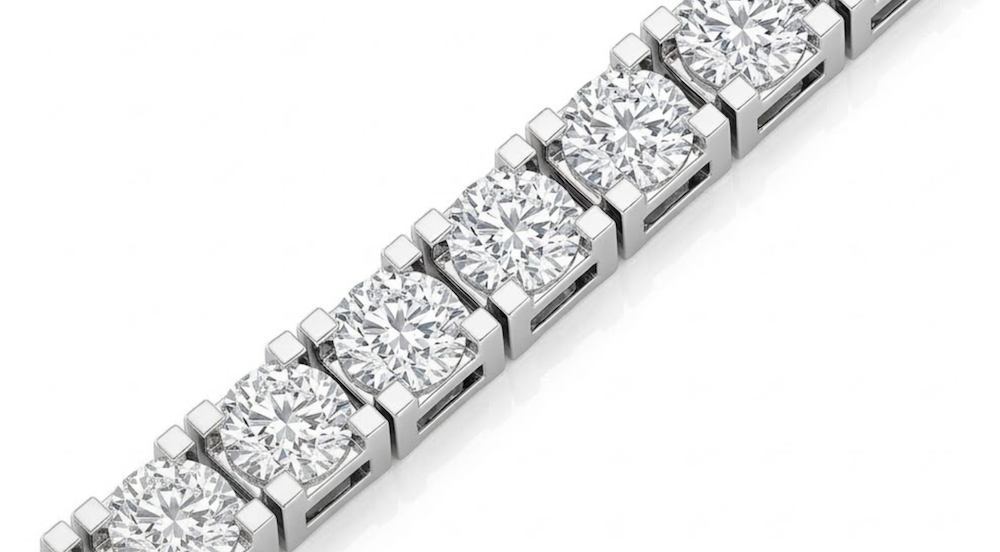
Tab (or square) prongs are flat, distinct blocks of metal that fold over the stone. While they do show more metal than a delicate claw, they offer exceptional durability.
- Best For: Step-cut diamonds like Emerald, Asscher, and Radiant cuts. The straight, architectural lines of a square prong perfectly complement the long, geometric facets and truncated corners of step cuts.
- Design Bonus (Tennis Bracelets): When used in tennis bracelets featuring round stones, tab prongs create a clever optical illusion. They square off the round edges, making the stones appear larger and giving the bracelet a very structured, continuous line.
5. The Double Claw: The Vintage Touch
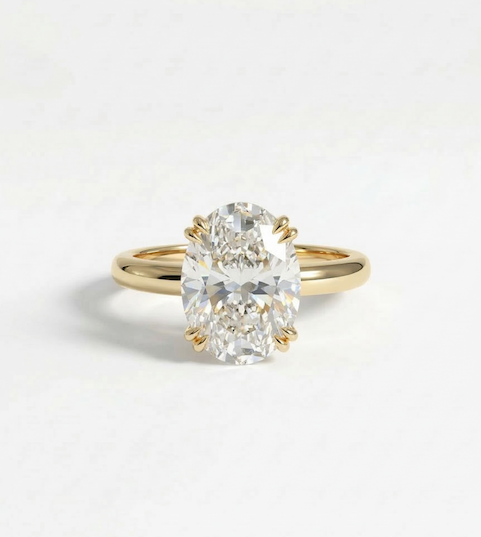
Instead of a single piece of metal at each corner, the double claw splits into two delicate prongs.
- Best For: Cushion cuts, Emerald cuts, and larger Oval or Round stones.
- The Look: This style instantly gives a ring a sophisticated, vintage-inspired aesthetic. While it is not incredibly common in standard, off-the-shelf market designs, you can certainly request this beautiful detail during our bespoke customization process, adding a refined, antique charm to a modern piece.
How to Choose Between Diamond Prong Styles
Choosing between the available diamond prong styles ultimately comes down to three factors: the shape of your stone, the look you want, and how you use your hands day to day. However, it is also worth thinking about longevity. For example, claw prongs are easier to retip over time than bezel or flush settings. Additionally, rounded prongs and flat prongs both offer excellent security, but they create very different visual effects. Therefore, it is always worth comparing options side by side before deciding.
Furthermore, prong style affects how much of the diamond is visible. In particular, finer pointed prongs allow more of the stone to be seen from the side, which can make the diamond appear larger. On the other hand, rounded or flat prongs are broader and may cover slightly more of the girdle. As a result, the same diamond can look noticeably different depending on the prong style you choose. Consequently, this is a decision that deserves as much thought as the stone itself.
Moreover, the number of prongs matters as well as the style. A four-prong setting maximises light exposure and gives the ring a cleaner, more modern look. In contrast, a six-prong setting provides greater security, which is particularly important for larger or more valuable diamonds. Nevertheless, both configurations are widely used and trusted by jewellers worldwide. Indeed, the choice between four and six prongs is one of the most common questions we receive during consultations. We are always happy to walk you through both options in detail.